Peptide Purity Explained: HPLC Purity, Net Peptide Content and What 98% vs 99% Means
HPLC purity, peptide content and net peptide content are different numbers. What each measures, what the impurities are, and when 98% vs 99% matters.
By the APL Research Team · Updated · 6 min read
"Purity" on a peptide label usually means one number, the HPLC result, but three different quantities are routinely called by that name: chromatographic purity, total peptide content and net (target) peptide content. They answer different questions, and confusing them is one of the commonest sources of error in molar calculations and in interpreting assay results. This guide separates the three, describes what the non-target fraction is made of, and sets out when the difference between 98% and 99% matters.
Three numbers that get called "purity"
| Term | Question it answers | Typical method | Blind to |
|---|---|---|---|
| HPLC (chromatographic) purity | Of the UV-absorbing peptide material, what fraction is the target? | RP-HPLC, area percent at about 215 nm | Water, counter-ions, salts, UV-transparent material |
| Peptide content (total) | What fraction of the powder's mass is peptide of any kind? | Amino acid analysis, elemental nitrogen | Whether that peptide is the target or a related impurity |
| Net peptide content | What fraction of the powder's mass is the target peptide? | Peptide content × HPLC purity; HPLC assay against a standard; qNMR; mass balance | — |
Usage is inconsistent between suppliers, and "peptide content" is sometimes used to mean the net figure, so it pays to check which is meant. Whatever the route, every approach to assigning a peptide's absolute purity, whether mass balance, amino acid analysis, quantitative NMR or nitrogen determination, needs a correction for structurally related peptide impurities to avoid bias [1].
Worked example
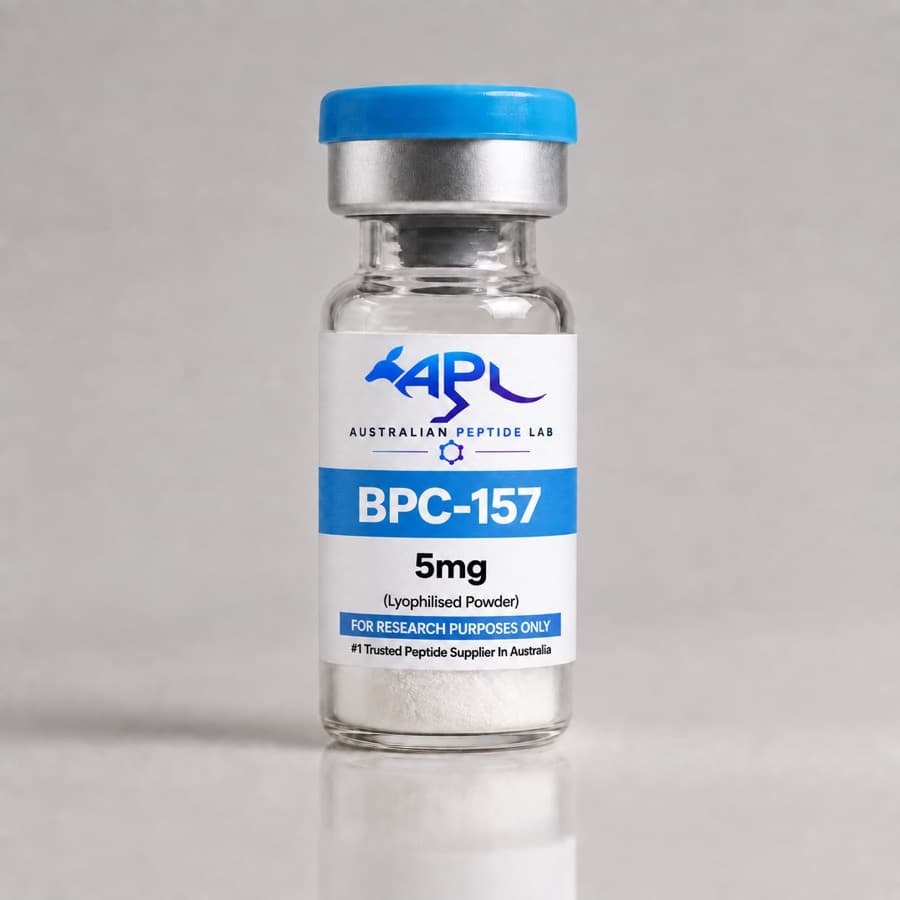
The figures below are illustrative, not from any batch. A nominal 10 mg fill of BPC-157 (1419.5 g/mol) with a total peptide content of 80% and an HPLC purity of 99%:
| Quantity | Calculation | Result |
|---|---|---|
| Gross fill | — | 10.0 mg |
| Peptide of any kind | 10.0 mg × 0.80 | 8.0 mg |
| Target peptide (net) | 8.0 mg × 0.99 | 7.92 mg |
| Moles if the fill were all peptide | 10.0 mg ÷ 1419.5 g/mol | 7.04 µmol |
| Moles actually present | 7.92 mg ÷ 1419.5 g/mol | 5.58 µmol |
Treating the gross weight as peptide would overstate the concentration by about 26% in this example, far more than the difference between 98% and 99% purity. The molarity calculator and the peptide molarity guide handle the conversion once net peptide content is known.
How content is measured
Real materials show how far below 100% the target can sit. In a mass-balance study of synthetic glucagon, water (Karl Fischer titration), trifluoroacetic acid (ion chromatography), inorganic ions (ICP-MS) and related peptide impurities were each quantified and subtracted, leaving 896 mg of glucagon per gram [2]. In a synthetic human C-peptide material prepared for an international comparison, LC–high-resolution MS identified more than 65 related peptide impurities, together 83.3 mg/g [1].
Amino acid analysis hydrolyses the peptide in 6 M HCl, quantifies the released amino acids and sums them against the known sequence [3]. Pharmacopoeial reference standards are assigned a value by mass balance on the bulk material, which is then used to value the vialled standard [4]. When the US Pharmacopeia compared an HPLC assay, quantitative NMR and amino acid analysis across laboratories using oxytocin, the HPLC assay against a common standard had the lowest between-laboratory variability [5].
What the impurities are
The non-target fraction of a synthetic peptide is not random debris. A review of related impurities in peptide medicines sorts them into synthesis-related and degradation-related groups [6]:
| Impurity class | Origin | Mass vs target | Typical HPLC behaviour |
|---|---|---|---|
| Deletion sequence | Inefficient Fmoc removal, or an incomplete coupling, leaves a residue out [6] | Minus one residue (e.g. −57.02 for Gly) | Often resolved, sometimes close |
| Insertion sequence | Excess activated amino acid adds an extra residue [6] | Plus one residue | Often resolved |
| Diastereomer | Racemisation during synthesis [6, 7] | None | Frequently co-elutes |
| Protecting-group adduct | Incomplete side-chain deprotection [6] | e.g. +56.06 (tBu), +252.08 (Pbf) | Usually later, more hydrophobic |
| Oxidation | Met, Trp or Cys side chains [6] | +15.99 per oxygen | Usually earlier |
| Succinimide or pyroglutamate | Degradation at Asp/Asn or N-terminal Gln/Glu [6] | −18.01 (from Asp or Glu) or −17.03 (from Asn or Gln) | Close to main peak |
| Dimers and oligomers | Intermolecular reactions [6] | Multiples of M | Usually later |
| Counter-ions | TFA from cleavage and purification [6] | Not covalently bound | Not in the purity figure |
| Unrelated peptides | Cross-contamination [6, 8] | Unrelated | Variable |
Where these come from in the manufacturing sequence is covered in how peptides are made, and how HPLC and MS each detect them in what HPLC testing measures.
The impurity profile also depends on who made the material and how. Analysts at the originator company compared liraglutide from five synthetic or recombinant suppliers and found impurity profiles distinct from the originator's, with trace metals promoting high-molecular-weight species in both liraglutide and semaglutide [9]. A 2026 follow-up by the same company reported amino acid deletions, additions and unidentified impurities in follow-on and compounded semaglutide and liraglutide [10]. Both studies come from the originator's own analysts, a conflict of interest worth weighing, but the analytical point stands: two materials with similar headline purity need not contain the same impurities.
What 98% vs 99% means in practice
At 98% HPLC purity, 2% of the UV-detected peptide material is something other than the target; at 99%, 1%. In a 10 mg vial that is roughly 0.2 mg against 0.1 mg of related peptides. Whether that difference matters depends on what the impurity fraction contains and what the experiment measures.
When it matters. The risk is an impurity that is itself active at the end point. In HIV vaccine-trial immunology, peptides bought from two independent custom suppliers contained contaminating peptides that produced false-positive CD8⁺ T-cell responses; one stock held about 1% by weight of a cytomegalovirus peptide [8]. In another case a contaminating epitope was undetectable by direct mass spectrometry yet still stimulated T cells [11]. Simple arithmetic shows why potency matters: an impurity 100 times more potent than the target, present at 1%, contributes about as much activity as the target itself.
When it matters less. Physicochemical work (solubility, aggregation, spectroscopy), method development and high-concentration screens where a 1% component cannot plausibly drive the read-out are rarely affected by the last percent. In these cases the counter-ion and net content usually introduce larger errors than the purity grade.
| Application | Sensitivity to the last 1% | What to ask for |
|---|---|---|
| Immunology (T-cell, epitope) assays | High | Largest single impurity; evidence of no cross-contamination |
| Receptor potency (EC50) work | Moderate to high | Impurity identities where available; consistent batch |
| Cell proliferation and viability | Moderate; counter-ion often matters more | Salt form and net content |
| Analytical method development | Low for purity, high for identity | MS data and the chromatogram |
| Physicochemical studies | Low | Net content and water |
Three further points sharpen the comparison:
- A specification is not a result. "≥98%" is an acceptance limit; the measured figure may be higher.
- Methods differ by about a percent. Purity belongs to a method, and co-eluting impurities can make a generic method read high, so 98.6% from one laboratory and 99.2% from another may describe the same material.
- Distribution beats total. A single 1.5% impurity is a different risk from fifteen 0.1% ones, even though both batches read 98.5%.
Purity over time
A purity result describes the batch on its test date. In freeze-dried amorphous peptides and proteins, deamidation rates rise with water content; in some systems the rate barely changes at low water content and then accelerates above a threshold [12]. Dry, cold storage of the lyophilised powder therefore matters as much as the starting grade; the peptide storage guide covers practice, and the glossary entries on deamidation and peptide oxidation describe the chemistry.
For the bench
- Work from net content for anything molar. Request content data where it exists, and if it does not, record that concentrations are nominal.
- Ask about the largest single impurity when the assay is sensitive to bioactive contaminants, not only the total.
- Check the salt form for cell work. Counter-ions affect both the weighed mass and some assays; see TFA vs acetate peptide salts.
- Read the COA critically. Understanding certificates of analysis explains what the HPLC and MS sections can and cannot establish, and the peptide purity glossary entry gives a short definition.
- Keep one batch per study. Impurity profiles differ between batches and makers, so switching mid-series adds a variable.
Frequently asked questions
What is the difference between peptide purity and net peptide content?
HPLC purity is relative: the target peptide's share of the UV-detected peptide material. Net peptide content is absolute: the mass of target peptide per mass of powder, after water, counter-ions and related impurities are accounted for. A batch can be 99% pure by HPLC while the powder is well under 90% target peptide by mass, as a mass-balance study of synthetic glucagon showed [2].
Is 98% purity good enough for in-vitro research?
For many biochemical and physicochemical experiments, yes. It is less safe where an impurity could itself drive the end point: in T-cell assays, a contaminating peptide at about 1% by weight produced false-positive responses [8]. The composition of the impurity fraction matters more than its total, so for sensitive assays ask what the largest single impurity is, not only the headline figure.
Why is the net peptide content lower than the weight on the label?
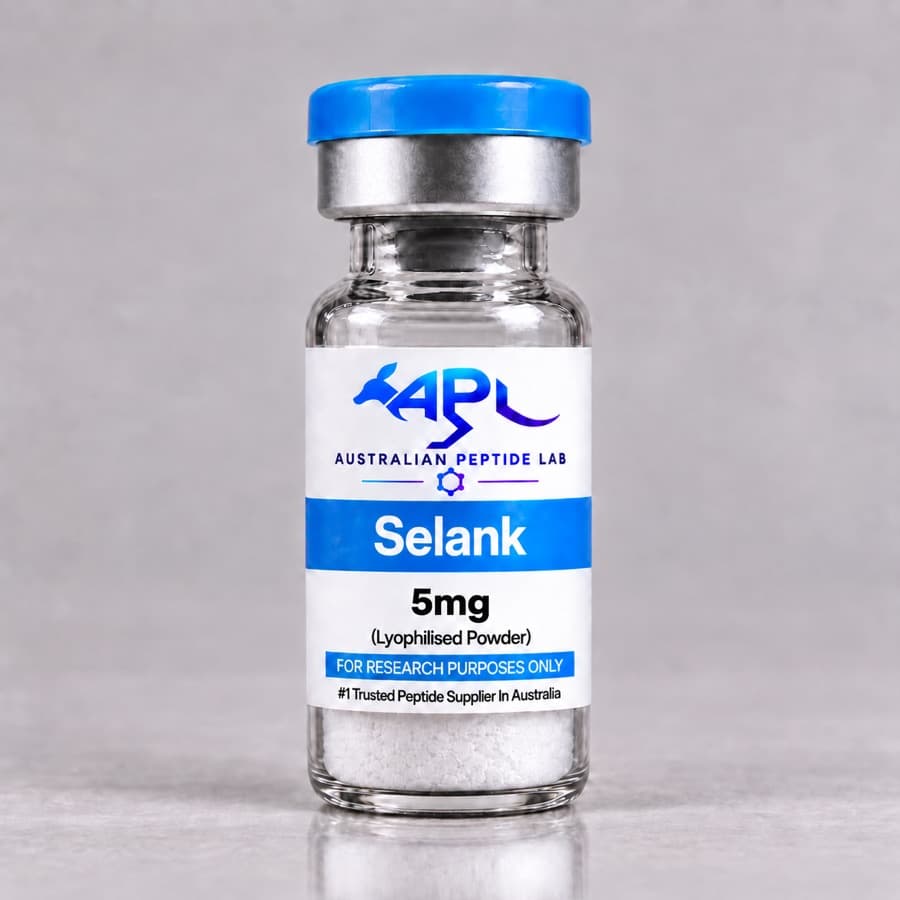
Lyophilised peptides contain counter-ions bound to their basic groups and residual water, neither of which is seen in an HPLC purity result. For Selank, three trifluoroacetate counter-ions alone would bring the peptide fraction to about 69% of the salt's mass before any water is counted. The TFA vs acetate guide works through the arithmetic.
How is peptide content measured?
The main approaches are amino acid analysis after acid hydrolysis [3], quantitative NMR, an HPLC assay against a characterised reference standard, and mass balance, in which water, counter-ions, inorganic ions and related impurities are each measured and subtracted [2]. In a multi-laboratory USP study using oxytocin, the HPLC assay showed the lowest between-laboratory variability [5].
Can peptide impurities be biologically active?
Yes. Deletion sequences, diastereomers and other close analogues share most of the target's structure, and an early review of peptide impurities warned that they can distort functionality studies enough to produce erroneous conclusions [6]. Cross-contamination with an unrelated peptide is a separate risk: in one documented case, a cytomegalovirus peptide widely used in immunology research turned up in HIV peptide stocks [8].
Does a purity result stay valid for the life of the vial?
It describes the batch on the test date. Lyophilised peptides degrade slowly, but solid-state reactions such as deamidation speed up as water content rises, in some systems abruptly above a threshold [12]. Dry, cold storage keeps the material closer to its tested state; see the peptide storage guide.
References
- 1.Li M, Josephs RD, Daireaux A, et al. Identification and accurate quantification of structurally related peptide impurities in synthetic human C-peptide by liquid chromatography-high resolution mass spectrometry. Anal Bioanal Chem. 2018. PubMed 29862433
- 2.Wang X, Zhang F, Li H, et al. Purity determination of synthetic glucagon using a mass balance approach. Sci Rep. 2020. PubMed 32157163
- 3.Qasrawi DO, Petrotchenko EV, Borchers CH. Amino acid analysis for peptide quantitation using reversed-phase liquid chromatography combined with multiple reaction monitoring mass spectrometry. Anal Bioanal Chem. 2023. PubMed 37468754
- 4.McCarthy D, Han Y, Carrick K, et al. Reference Standards to Support Quality of Synthetic Peptide Therapeutics. Pharm Res. 2023. PubMed 36949371
- 5.Li C, Bhavaraju S, Thibeault MP, et al. Survey of peptide quantification methods and comparison of their reproducibility: A case study using oxytocin. J Pharm Biomed Anal. 2019. PubMed 30640042
- 6.D'Hondt M, Bracke N, Taevernier L, et al. Related impurities in peptide medicines. J Pharm Biomed Anal. 2014. PubMed 25044089
- 7.Badgujar D, Paritala ST, Matre S, et al. Enantiomeric purity of synthetic therapeutic peptides: A review. Chirality. 2024. PubMed 38448043
- 8.Currier JR, Galley LM, Wenschuh H, et al. Peptide impurities in commercial synthetic peptides and their implications for vaccine trial assessment. Clin Vaccine Immunol. 2008. PubMed 18077621
- 9.Staby A, Steensgaard DB, Haselmann KF, et al. Influence of Production Process and Scale on Quality of Polypeptide Drugs: a Case Study on GLP-1 Analogs. Pharm Res. 2020. PubMed 32514880
- 10.Kopp KL, Lamberth K, Schelde O, et al. Impurities and Potential Immunogenicity Associated With Follow-on and Compounded Glucagon-like Peptide-1 Receptor Agonists. Pharm Res. 2026. PubMed 42533250
- 11.Brezar V, Culina S, Østerbye T, et al. T cells recognizing a peptide contaminant undetectable by mass spectrometry. PLoS One. 2011. PubMed 22194932
- 12.Ohtake S, Feng S, Shalaev E. Effect of Water on the Chemical Stability of Amorphous Pharmaceuticals: 2. Deamidation of Peptides and Proteins. J Pharm Sci. 2018. PubMed 28923320
This article summarises published research for educational purposes. It is not medical advice. Compounds sold by Australian Peptide Lab are research reagents for in-vitro laboratory use only, not for human or veterinary use.