TFA vs Acetate Peptide Salts: Counter-Ions, Assay Interference and the Mass Maths
Why peptides arrive as TFA salts, how trifluoroacetate can interfere with cell and receptor assays, how salt exchange works, and how it shifts mass.
By the APL Research Team · Updated · 6 min read
Most synthetic peptides are isolated as salts, and the anion paired with their positive charges, the counter-ion, is usually trifluoroacetate. That is a by-product of manufacture rather than a design choice: trifluoroacetic acid (TFA) cleaves the peptide from the synthesis resin and serves as the ion-pairing reagent in HPLC purification [1]. The counter-ion is easy to overlook because HPLC purity ignores it, but it adds mass, can interfere with some biological and spectroscopic measurements, and can be exchanged when an experiment calls for it.
Where counter-ions come from
Under the acidic conditions of cleavage and reversed-phase purification, every basic group on a peptide is protonated: the free N-terminal amine and the side chains of lysine, arginine and, partly, histidine. Each positive charge pairs with an anion from the mobile phase. Because cleavage and purification both rely on trifluoroacetic acid, peptides are obtained as TFA salts [1], and cationic peptides in particular carry tightly bound trifluoroacetate [2]. The 1999 study that first flagged TFA's effects in cell culture made the same point: peptides purified by HPLC are often TFA salts because TFA is a standard solvent component in the separation [3].
Approved peptide medicines, by contrast, appear with a variety of counter-ions, and a review cataloguing them examined how the counter-ion affects structure, physicochemical properties and formulation [4]. Research-grade peptides are usually supplied as whatever salt manufacture produced unless an exchange was requested.
| Counter-ion | Usual origin | Mass added per basic site (as the acid) | Notes |
|---|---|---|---|
| Trifluoroacetate | Cleavage and RP-HPLC in TFA | 114.02 g/mol | Default form; strong IR band at 1673 cm⁻¹ [5] |
| Acetate | Exchange, or purification with acetic acid | 60.05 g/mol | From a weaker acid (pKa about 4.5) [2] |
| Chloride | Exchange with HCl | 36.46 g/mol | Recommended form for TFA-sensitive cell work [3] |
How the counter-ion changes mass and molarity
A salt's formula weight is the free peptide plus one acid molecule per protonated basic group:
MW(salt) = MW(peptide) + n × MW(acid), and the peptide fraction is MW(peptide) ÷ MW(salt).
Calculated for three peptides, assuming complete salt formation and no water:
| Peptide | Basic groups (n) | Free peptide | Tris/bis-TFA salt | Acetate salt | HCl salt |
|---|---|---|---|---|---|
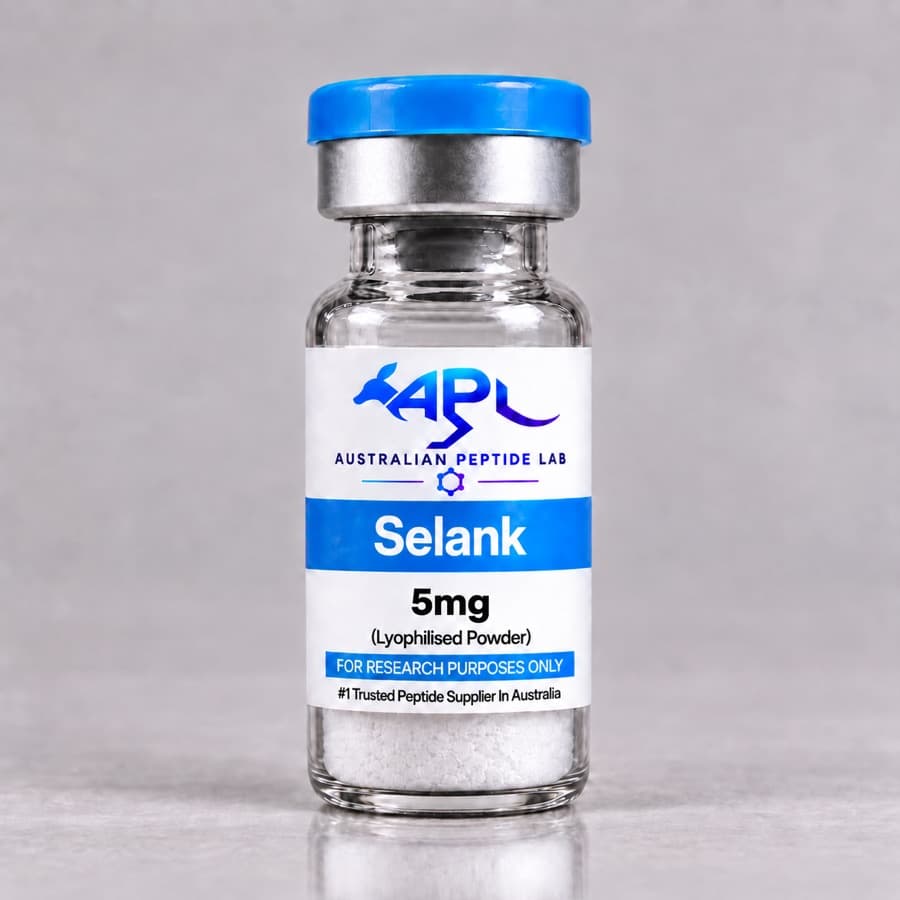
| Selank (TKPRPGP) | 3 (N-term, Lys, Arg) | 751.87 g/mol | 1093.94 (68.7% peptide) | 932.03 (80.7%) | 861.25 (87.3%) |
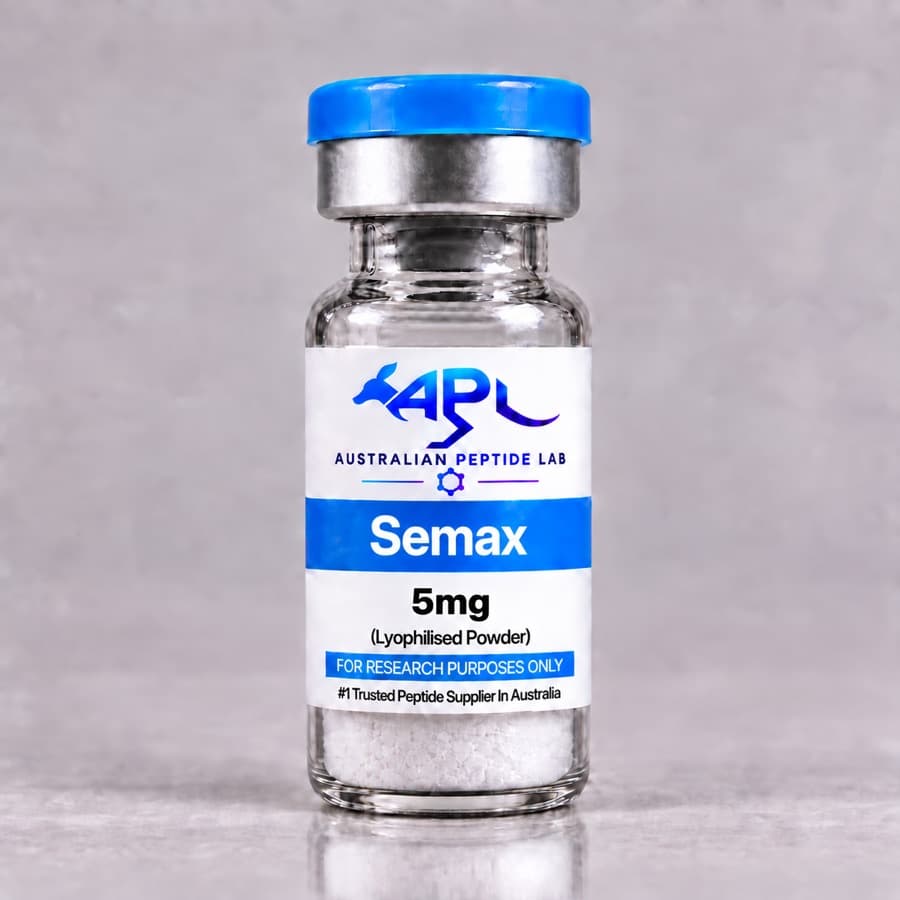
| Semax (MEHFPGP) | 2 (N-term, His) | 813.92 g/mol | 1041.97 (78.1%) | 934.02 (87.1%) | 886.84 (91.8%) |
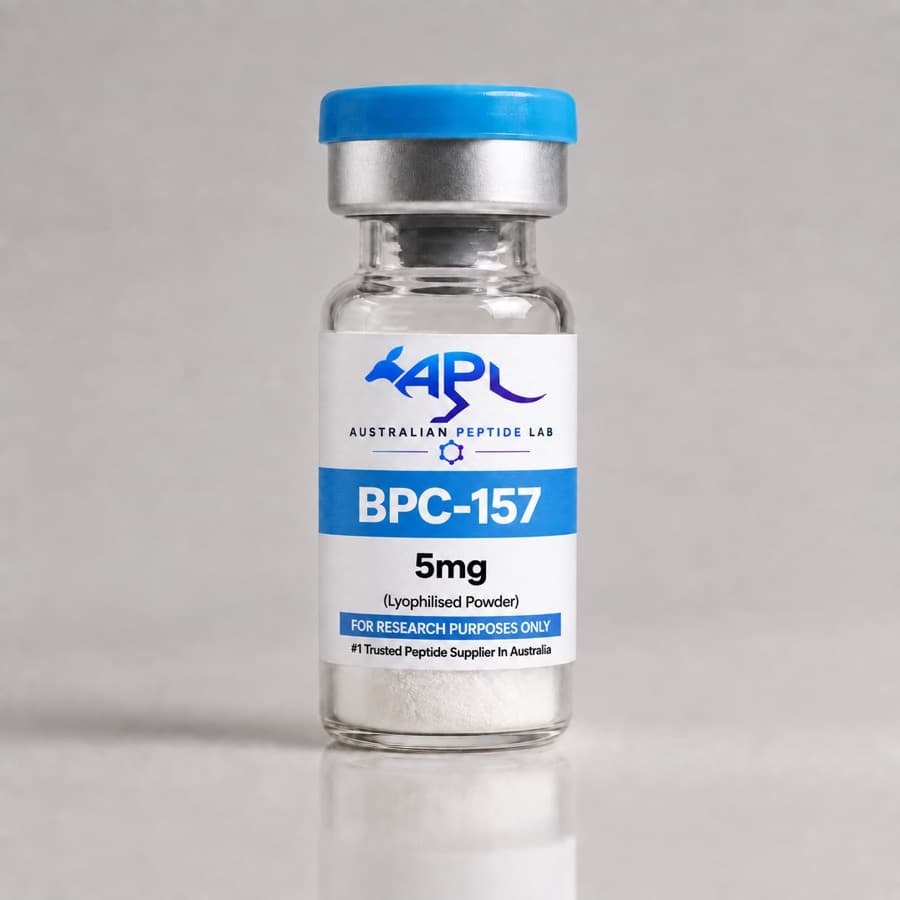
| BPC-157 (15-mer) | 2 (N-term, Lys) | 1419.5 g/mol | 1647.55 (86.2%) | 1539.60 (92.2%) | 1492.42 (95.1%) |
Short, basic peptides are affected most: counter-ions can be almost a third of a TFA-salt Selank sample's mass before residual water is counted. Real batches deviate from these idealised figures, since histidine is only partly protonated and the measured counter-ion content depends on the sequence and on how many positive charges it carries [1]. In a metrology study of synthetic glucagon, for instance, TFA was measured directly by ion chromatography as one component of a full mass balance [6].
Worked example
Weighing 1.00 mg of Selank tris-TFA salt and treating it as free peptide implies 1.33 µmol (1.00 mg ÷ 751.87 g/mol). The peptide actually present is 0.687 mg, or 0.914 µmol. Dissolved in 1.00 mL, the stock is 0.91 mM rather than the assumed 1.33 mM, about 31% low before any correction for water. The same stock also carries about 2.7 mM trifluoroacetate (three per peptide), and a 10 µM working solution carries about 30 µM. The molarity calculator and peptide molarity guide handle the conversion once net content is known.
What TFA can do in biological and spectroscopic assays
The evidence is a mixture of clear interference in some systems and none in others:
| System | Finding | Ref |
|---|---|---|
| Fetal rat osteoblasts, articular chondrocytes, neonatal mouse calvariae | TFA at 10⁻⁸–10⁻⁷ M reduced cell numbers and thymidine incorporation within 24 h; TFA salts of amylin, amylin-(1–8) and calcitonin gave less proliferation than HCl salts | [3] |
| Glycine, GABA-A and 5-HT3 receptors in Xenopus oocytes | Sodium trifluoroacetate (100 µM–3 mM) enhanced currents at low glycine concentrations; no effect on GABA-A or 5-HT3 receptors | [7] |
| Five antimicrobial peptides as acetate, HCl and TFA salts | Substantial differences in antibacterial activity, haemolysis and HaCaT cytotoxicity between salts, with no consistent pattern | [8] |
| 35 cationic lipopeptides | Removing TFA had no significant effect on antimicrobial activity | [9] |
| Liposomal permeability assay | Permeability coefficients varied with sequence and salt form | [1] |
| Infrared spectroscopy | TFA's 1673 cm⁻¹ band overlaps or obscures the peptide amide I band | [5] |
The Cornish study is the one most often cited, and its conclusion was broad: the authors considered the finding likely to be relevant to studies of purified peptides at concentrations above 10⁻⁹ M in any cell or tissue type, and recommended converting peptides to the hydrochloride or an equivalent salt before biological testing [3]. The glycine-receptor work described contaminating TFA in HPLC-purified peptides as a potential source of experimental variability that requires control [7]. Neither suggests TFA is acutely toxic: in mammalian toxicology its acute toxicity is very low, and repeated oral exposure in rats produced mild liver hypertrophy as the lead effect [10]. The issue for bench work is confounding, not hazard.
Exchanging the counter-ion
| Method | How it works | Completeness | Caveats |
|---|---|---|---|
| Lyophilisation from dilute HCl | Excess strong acid displaces TFA, which is removed on drying; repeated as needed | Essentially complete at 2–10 mM HCl [5]; 10 mM optimal in a 2025 validation [1] | Higher HCl concentrations altered indolicidin's structure and thermal stability [5]; classical 0.1 M HCl means working below pH 1 [2] |
| Lyophilisation from acetic acid | Same principle with a weaker acid | Satisfactory TFA removal [11] | Confirm residual TFA with an ion assay |
| Ion-exchange resin | Anion exchange swaps TFA for acetate or another ion | Partial to almost complete [2] | Allows exchange to a chosen counter-ion [2] |
| RP-HPLC with acetate mobile phase | Re-purification exchanges the ion in the column | Partial to almost complete [2] | An extra chromatographic step, with some material lost |
| Deprotonation and reprotonation | Basic solution frees the amines, then the chosen acid is added | Complete removal [2] | Needs a basic solution; base-sensitive sequences need care |
Whatever the method, confirm the result. Ion chromatography gave the best performance of three techniques compared for determining acetate, trifluoroacetate and chloride in synthetic peptides [11]; validated alternatives include ¹⁹F-NMR, FT-IR and HPLC with evaporative light-scattering detection [1]. In the 2025 study, HCl exchange did not affect peptide purity at any concentration tested [1], but re-running HPLC after exchange is still prudent for labile sequences. Counter-ions also influence physicochemical properties [4], so a peptide that dissolved readily as one salt may behave differently as another; the solubility troubleshooting guide and the peptide solubility entry cover practical rescue steps.
Choosing a salt form for an experiment
| Experiment | TFA salt acceptable? | Notes |
|---|---|---|
| HPLC or MS method development, analytical standards | Usually | Salt form matters only for weighed-mass calculations |
| Biochemical binding or enzyme assays | Often | Include a counter-ion-matched control |
| Cell proliferation, viability, differentiation | Prefer acetate or HCl | TFA effects reported from 10⁻⁸ M [3] |
| Ion-channel electrophysiology | Prefer exchange or control | Glycine-receptor modulation from 100 µM [7] |
| IR or other secondary-structure spectroscopy | Remove TFA | Amide I overlap [5] |
| Antimicrobial and cytotoxicity screening | Specify and keep constant | Salt effects real but peptide-specific [8, 9] |
Two habits protect most experiments. First, a vehicle control containing sodium trifluoroacetate at the concentration the peptide stock delivers (n × peptide concentration) separates counter-ion effects from peptide effects; the dose–response design guide covers how to build controls into a concentration series. Second, the salt form belongs in the methods section: the 2025 ETH Zurich study concluded that counter-ion quantification and specification matter in any assay using synthetic peptides [1].
For the bench
- Find out the salt form rather than assuming it. It belongs on the batch documentation; for Australian Peptide Lab products, that documentation is available on request.
- Correct for it. Use net peptide content, or at minimum the salt formula weight, for molar work; how peptides are made explains why the counter-ion is there in the first place.
- Calculate the counter-ion dose in the well. Multiply the peptide concentration by the number of basic groups to estimate trifluoroacetate concentration.
- Match the control. Sodium trifluoroacetate at that concentration is a simple, cheap control.
- Exchange gently if needed. Dilute HCl (2–10 mM) with lyophilisation, followed by HPLC to confirm purity and an ion assay to confirm removal, is the best-documented route.
Frequently asked questions
Why are most synthetic research peptides supplied as TFA salts?
Trifluoroacetic acid is used twice in standard manufacture: to cleave the finished peptide from the synthesis resin and as the ion-pairing additive in reversed-phase HPLC purification. The peptide's protonated basic groups leave purification paired with trifluoroacetate anions, so the lyophilised product is a TFA salt unless a deliberate exchange step follows [1, 2]. Acetate or hydrochloride forms need that extra step.
Does trifluoroacetate affect cell-based assays?
It can. In fetal rat osteoblast cultures, TFA at 10 to 100 nM reduced cell numbers and thymidine incorporation within 24 hours, and TFA salts of amylin and calcitonin gave consistently less proliferation than their hydrochloride salts [3]. The effect is not universal: TFA had no significant effect on the antimicrobial activity of a series of cationic lipopeptides [9]. A counter-ion-matched control settles the question for a given assay.
How much of a TFA-salt peptide's weight is counter-ion?
It depends on how many basic groups the sequence has. Each protonated N-terminus, Lys, Arg or His can carry one trifluoroacetate (114.02 g/mol as the acid). For Selank, with three such groups, a full tris-TFA salt is about 31% counter-ion by mass; for BPC-157, with two, about 14%. Measured contents vary, so batch data beat calculation.
Can a TFA salt be converted to hydrochloride or acetate in the lab?
Yes. The usual method is to dissolve the peptide in dilute HCl and lyophilise, repeating as needed; 2–10 mM HCl removed essentially all TFA from indolicidin without altering its secondary structure, whereas higher concentrations could [5], and a 2025 validation study found 10 mM optimal [1]. Lyophilisation from acetic acid, ion-exchange resins and HPLC with an acetate mobile phase are alternatives [2, 11].
Does the counter-ion change the HPLC purity result?
No. Area-percent purity compares peptide peaks with one another, and counter-ions are not part of that calculation. What changes is the mass of powder that corresponds to a given amount of peptide, which is why salt form matters for net peptide content and molar calculations rather than for purity. See peptide purity explained.
Is an acetate salt always the better choice?
Not necessarily. When five antimicrobial peptides were each prepared as acetate, hydrochloride and TFA salts, activity and cytotoxicity differed substantially between salt forms, but no single salt was best across all peptides [8]. Acetate and chloride avoid TFA's specific interferences, yet the right choice depends on the assay, and the salt form should be reported either way.
References
- 1.Erckes V, Streuli A, Chamera Rendueles L, et al. Towards a Consensus for the Analysis and Exchange of TFA as a Counterion in Synthetic Peptides and Its Influence on Membrane Permeation. Pharmaceuticals (Basel). 2025. PubMed 40872554
- 2.Roux S, Zékri E, Rousseau B, et al. Elimination and exchange of trifluoroacetate counter-ion from cationic peptides: a critical evaluation of different approaches. J Pept Sci. 2008. PubMed 18035848
- 3.Cornish J, Callon KE, Lin CQ, et al. Trifluoroacetate, a contaminant in purified proteins, inhibits proliferation of osteoblasts and chondrocytes. Am J Physiol. 1999. PubMed 10567002
- 4.Sikora K, Jaśkiewicz M, Neubauer D, et al. The Role of Counter-Ions in Peptides-An Overview. Pharmaceuticals (Basel). 2020. PubMed 33287352
- 5.Andrushchenko VV, Vogel HJ, Prenner EJ. Optimization of the hydrochloric acid concentration used for trifluoroacetate removal from synthetic peptides. J Pept Sci. 2007. PubMed 17031869
- 6.Wang X, Zhang F, Li H, et al. Purity determination of synthetic glucagon using a mass balance approach. Sci Rep. 2020. PubMed 32157163
- 7.Tipps ME, Iyer SV, John Mihic S. Trifluoroacetate is an allosteric modulator with selective actions at the glycine receptor. Neuropharmacology. 2012. PubMed 22548713
- 8.Sikora K, Jaśkiewicz M, Neubauer D, et al. Counter-ion effect on antistaphylococcal activity and cytotoxicity of selected antimicrobial peptides. Amino Acids. 2018. PubMed 29307075
- 9.Greber KE, Dawgul M, Kamysz W, et al. Cationic Net Charge and Counter Ion Type as Antimicrobial Activity Determinant Factors of Short Lipopeptides. Front Microbiol. 2017. PubMed 28203232
- 10.Dekant W, Dekant R. Mammalian toxicity of trifluoroacetate and assessment of human health risks due to environmental exposures. Arch Toxicol. 2023. PubMed 36800005
- 11.Mrozik W, Markowska A, Guzik L, et al. Determination of counter-ions in synthetic peptides by ion chromatography, capillary isotachophoresis and capillary electrophoresis. J Pept Sci. 2012. PubMed 22252914
This article summarises published research for educational purposes. It is not medical advice. Compounds sold by Australian Peptide Lab are research reagents for in-vitro laboratory use only, not for human or veterinary use.