
Peptide Research Lab Supplies Australia
Lab supplies cover what sits around a lyophilised peptide vial: the diluent, the syringes and swabs used to transfer it, and kits that package them together. Bacteriostatic water, sterile water with 0.9% benzyl alcohol, is sold on its own in 10 mL vials. The Research Starter Kit adds ten sterile 1 mL syringes and twenty alcohol swabs, and the Complete Research Bundle pairs those consumables with retatrutide and GHK-Cu vials. For resellers buying at volume, the Brand Starter Kit supplies 50 peptide vials, unbranded or custom-labelled. The peptide reconstitution guide shows how the pieces fit together at the bench.
 Out of stock
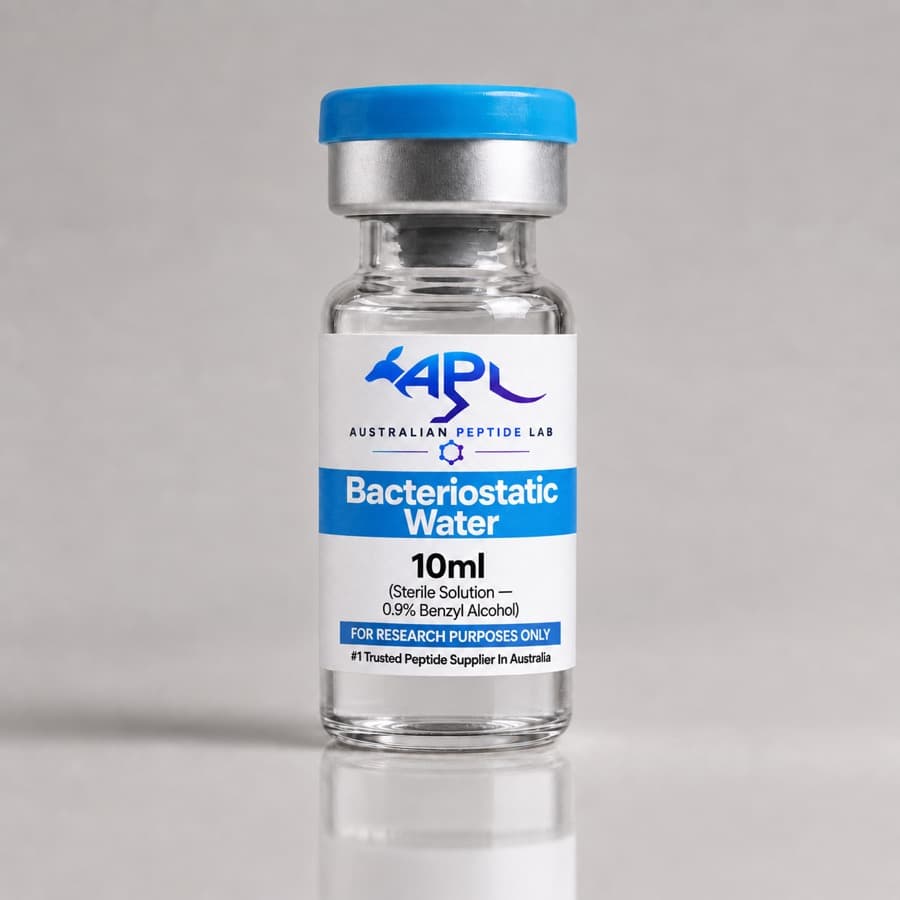
Bacteriostatic Water
USP grade, 0.9% benzyl alcohol
 Out of stock
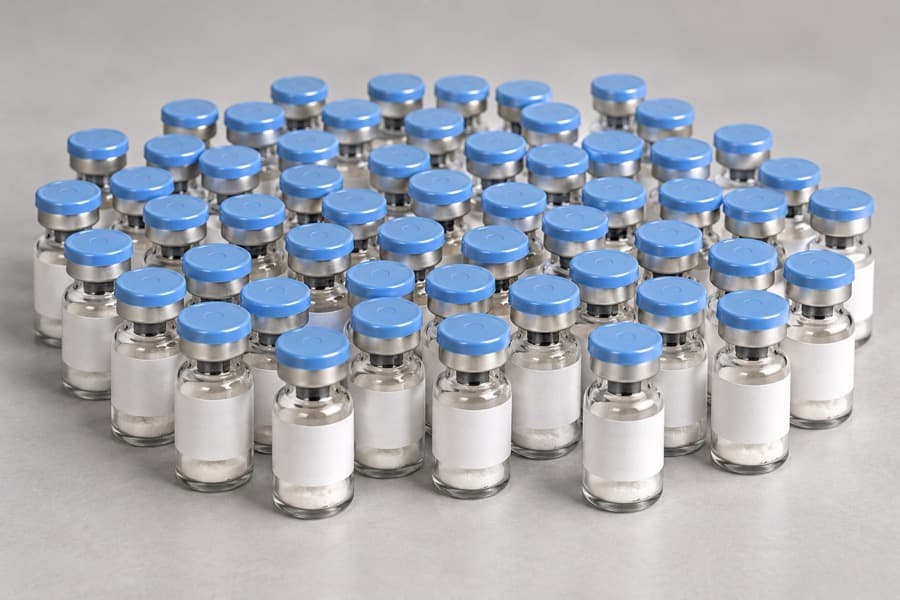
Brand Starter Kit — 50 Vials
≥99% (HPLC verified, batch COAs for every compound)
 Out of stock
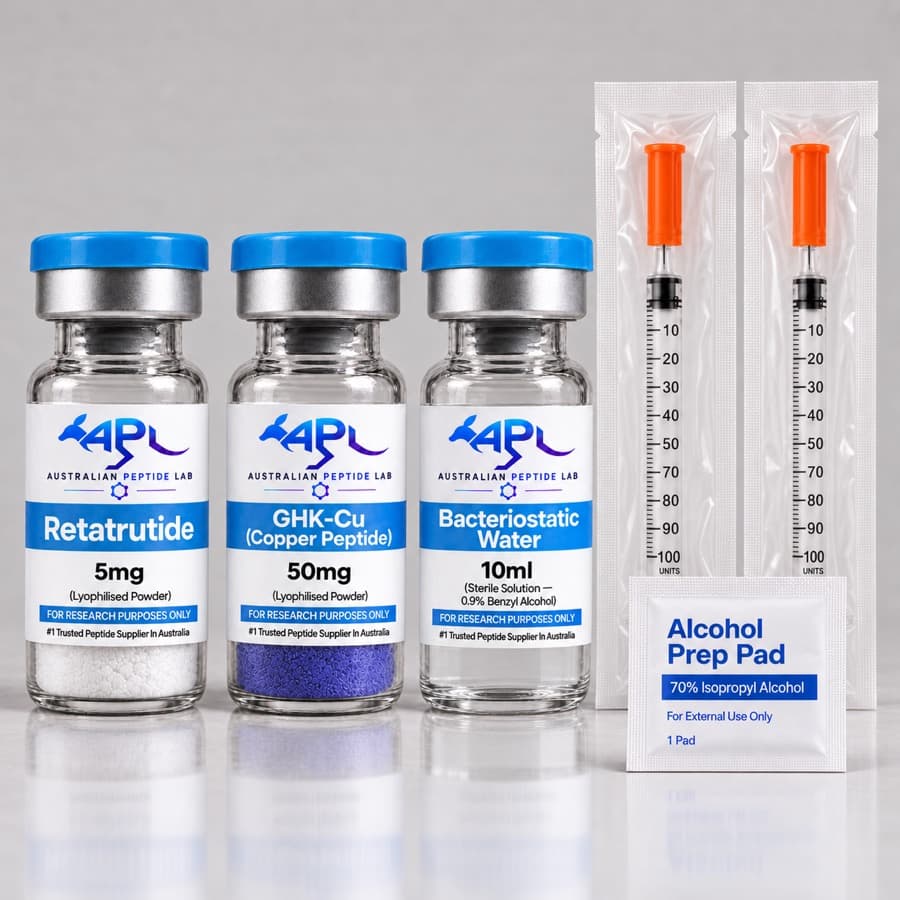
Complete Research Bundle
≥99% (HPLC verified peptides)
 Out of stock
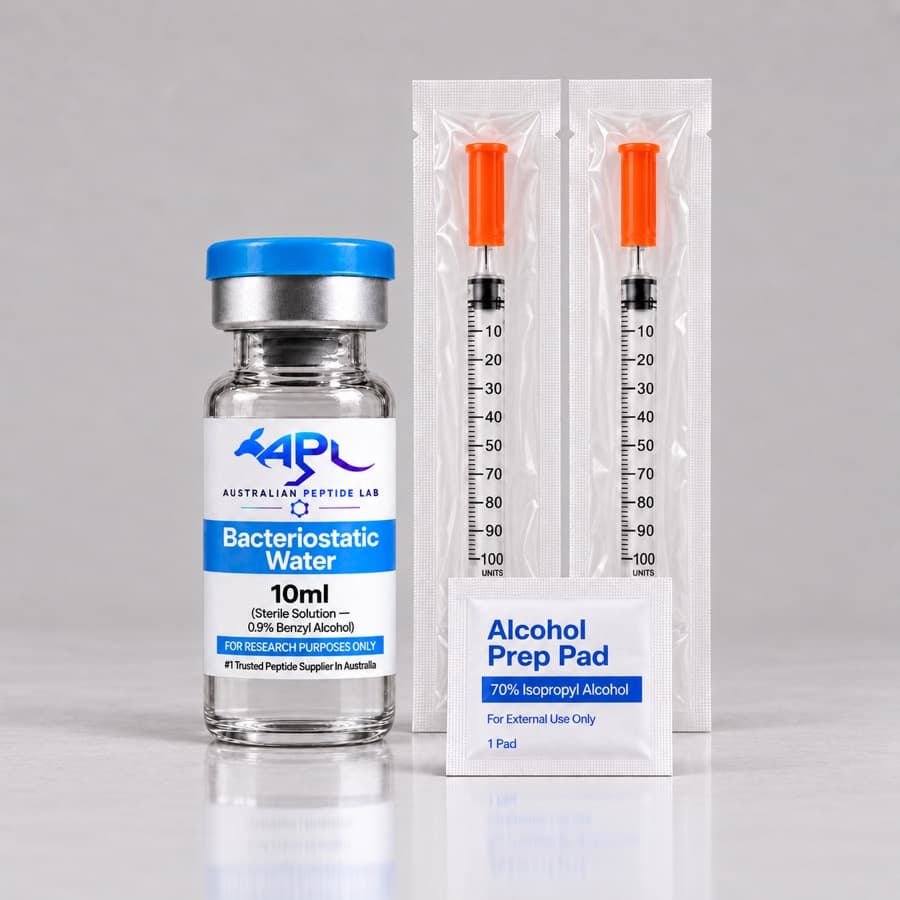
Research Starter Kit
Sterile components
What each item is for
Every item in this range serves one step: getting a lyophilised peptide into a measured, labelled solution without contaminating it. The table sets out contents and storage as listed for each product.
| Product | Contents | Role at the bench | Storage |
|---|---|---|---|
| Bacteriostatic Water | 10 mL vial, or 3 × 10 mL; sterile water with 0.9% benzyl alcohol | Diluent for stocks that will be sampled more than once | Room temperature; discard 28 days after first puncture |
| Research Starter Kit | 10 mL bacteriostatic water, 10 sterile 1 mL insulin syringes (29G), 20 alcohol prep swabs | Consumables for ten diluent transfers; no peptide | Room temperature |
| Complete Research Bundle | Retatrutide 5 mg vial, GHK-Cu 50 mg vial, starter kit (10 mL bacteriostatic water, ten sterile syringes, alcohol swabs) | Two peptides plus the consumables to reconstitute both | Peptides −20 °C; kit at room temperature |
| Brand Starter Kit — 50 Vials | 10 vials each of retatrutide 5 mg, tirzepatide 5 mg, semaglutide 5 mg, BPC-157 5 mg and GHK-Cu 50 mg; unbranded or custom label | Trade stock for supplying research reagents under the buyer's own label | −20 °C on arrival |
Choosing between them
- Peptides already on hand, diluent needed. Buy bacteriostatic water alone. The 3 × 10 mL pack makes sense when vials will be opened at different times, because each diluent vial's in-use period starts at its own first puncture.
- Setting up a bench for the first time. The Research Starter Kit gives twenty swabs for ten syringes, since each transfer pierces two septa: the diluent vial's and the peptide vial's.
- Starting from nothing. The Complete Research Bundle shares one diluent vial between two peptides. A fresh syringe for every 1 mL diluent draw avoids carrying one compound back into the shared vial; the bundle page works through the syringe and volume budget.
- Supplying other laboratories. The Brand Starter Kit is a business-to-business trade kit. White-label peptides explained and the wholesale supplier guide cover labelling, documentation and trade supply, and larger orders go through the wholesale page.
Bacteriostatic or sterile water?
The choice turns on whether the stock will be sampled repeatedly and whether benzyl alcohol could confound the assay. At 0.9%, benzyl alcohol is 9 mg/mL, about 83 mM, and it dilutes along with the peptide: 8.3 mM after a 1:10 dilution and 0.83 mM after 1:100. Published work has reported cytotoxicity, membrane fluidisation, shifts in cAMP signalling and effects in a rat tendon-repair model at concentrations in or near these ranges; the bacteriostatic water monograph gives the details and sources.
| Situation | Better choice |
|---|---|
| Stock sampled several times over days to weeks at 2–8 °C | Bacteriostatic water |
| Cell assays, especially cAMP read-outs, or repair models | Sterile water, or bacteriostatic water with a matched vehicle control |
| Stock split straight into single-use aliquots and frozen | Either; the preservative adds little once aliquots are sealed |
What is bacteriostatic water explains the preservative, and bacteriostatic water vs sterile water compares the two in depth.
Handling notes that apply across the range
- Swab properly. Wipe each septum back and forth, or use a fresh face of the swab for each wipe, and let the alcohol dry before puncturing. The starter kit page cites the comparison behind this.
- Use enough of the barrel. Syringe error rises when less than about 20% of capacity is measured, so on a 1 mL syringe keep draws at 200 µL or more and use a micropipette or an intermediate dilution below that.
- One needle, one entry. A fresh sterile needle for every entry into a shared diluent vial prevents carry-over and contamination.
- Date on first puncture. Write the date on the diluent vial when the seal is first pierced.
- Keep peptides cold and dry. Store lyophilised vials at −20 °C, let them reach room temperature before opening, and split reconstituted stocks into aliquots rather than repeatedly puncturing one vial.
Sterile technique for peptide handling, the peptide storage guide and how lyophilisation works cover each point in more depth.
The calculations
The reconstitution calculator turns vial mass and diluent volume into a concentration and a per-aliquot volume in µL. The dilution calculator applies C1V1 = C2V2, which also gives the benzyl alcohol carried into a working solution when 9 mg/mL is entered as the starting concentration. The molarity calculator converts mass to molar units once a molecular weight is fixed, and peptide molarity calculations explains the net peptide content correction.
Lab Supplies: frequently asked questions
Which diluent suits cell-based experiments?
Bacteriostatic water works if the vehicle control carries the same benzyl alcohol concentration as the treated wells. At 0.9% (about 83 mM), the preservative is still 0.83 mM after a 1:100 dilution, a range where effects on cultured cells and cAMP signalling have been reported; the bacteriostatic water monograph cites the studies. Otherwise, reconstitute in preservative-free sterile water. Bacteriostatic vs sterile water compares the two.
How long can bacteriostatic water be used after opening?
Discard it 28 days after first puncture. That is the default in-use period for opened multiple-dose vials under US Pharmacopeia General Chapter <797>, unless a manufacturer specifies otherwise. It is an upper limit for an opened container rather than a measurement of the preservative, so date the vial when the seal is first pierced and discard it sooner if it turns cloudy.
Does the Research Starter Kit include a peptide?
No. It holds 10 mL of bacteriostatic water, ten sterile 1 mL insulin syringes with 29G needles and twenty alcohol prep swabs. Peptides are sold separately in the shop, or together with the same consumables in the Complete Research Bundle.
How much bacteriostatic water does a typical set of vials need?
At 2.0 mL per vial, one 10 mL vial reconstitutes five peptide vials; at 1.0 mL, ten. A 50 mg vial taken to 10 mg/mL uses 5.0 mL. Because each diluent vial's 28-day window starts at first puncture, the 3 × 10 mL pack suits work where vials are opened weeks apart. The reconstitution calculator gives volumes for other targets.
Who is the Brand Starter Kit for?
Businesses supplying research reagents under their own label. It contains ten 5 mg vials each of retatrutide, tirzepatide, semaglutide and BPC-157, plus ten 50 mg vials of GHK-Cu, unbranded or printed to the buyer's artwork. Batch documentation for every compound is available on request. See white-label peptides explained, the wholesale page and are research peptides legal in Australia?
Lab Supplies guides
Peptide Reconstitution: A Bench Method for Lyophilised Research Peptides
A bench method for reconstituting lyophilised peptides: equilibration, diluent choice, adding diluent, concentration tables, aliquoting and labelling.
8 min read →Lab TechniqueWhat Is Bacteriostatic Water? Composition, Benzyl Alcohol and Laboratory Use
Bacteriostatic water explained: 0.9% benzyl alcohol chemistry, how the preservative works, its limits, in-use handling and how it interacts with peptides.
6 min read →Lab TechniqueBacteriostatic Water vs Sterile Water: Choosing a Diluent for In-Vitro Peptide Work
Bacteriostatic vs sterile water for peptide stocks: a comparison table, benzyl alcohol levels carried into assays, vehicle controls and when each fits.
6 min read →Lab TechniqueSterile Technique for Peptide Solutions: Aseptic Bench Practice, Filtration and Records
Aseptic technique for peptide solutions: clean benches vs biosafety cabinets, routine, sterile filtration losses, endotoxin, equipment and records.
6 min read →Lab TechniquePeptide Storage and Stability: Powder, Solutions and Australian Summer Transit
How research peptides degrade and how to store them: powder vs solution, freeze–thaw, light, humidity and heat during Australian summer transit.
7 min read →