How Lyophilisation Works: Freezing, Drying and Why a Peptide Cake Stays Stable
Freeze-drying for peptide work: freezing, primary and secondary drying, cake defects, residual moisture, excipients and limits of solid-state stability.
By the APL Research Team · Updated · First published · 7 min read
Lyophilisation, or freeze-drying, removes water from a frozen solution first by sublimation and then by desorption, leaving a porous solid in which most solution-phase degradation chemistry slows dramatically. It is the reason peptide reagents can be stored for long periods and shipped as powder. This guide explains what happens at each stage, what the cake can and cannot tell you, and why the dried state is stable but not inert.
Why peptides are freeze-dried
Therapeutic proteins and peptides are often unstable in liquid form, which is why so many are made, stored and transported as solids [1]. In water, peptides hydrolyse, deamidate, oxidise and aggregate; removing the water removes the medium most of those reactions need. Freeze-drying does this at low temperature, so heat-sensitive molecules are never exposed to the temperatures that conventional drying would require.
The dried state is not a perfect preservative. Chemical and physical degradation of proteins continues in the solid on the time scale of drying, distribution and use [2], so lyophilisation buys time rather than permanence.
The three stages
A freeze-drying run has three stages, and the conditions in each shape the final cake [3].
| Stage | What happens | Key variable | Typical failure |
|---|---|---|---|
| Freezing | Water crystallises as ice; solutes concentrate between the crystals | Ice nucleation temperature, cooling rate, annealing | Small ice crystals that slow drying; uneven batches |
| Primary drying | Ice sublimes under vacuum | Product temperature relative to the collapse temperature | Collapse of the cake structure |
| Secondary drying | Water held in the solid desorbs at a higher shelf temperature | Final temperature and time | Over- or under-drying |
Freezing
Freezing is the least controlled and probably the most complex step [4]. Solutions supercool before ice nucleates, and the nucleation temperature varies at random from vial to vial; raising it gives larger ice crystals, larger pores and a shorter primary drying time, which is why controlled-nucleation methods were developed [5]. Freezing conditions go on to affect cake morphology, the physical state of the solid, residual moisture, reconstitution time and the stability of the protein itself [4].
As ice forms, everything else is squeezed into a shrinking freeze-concentrated phase between the crystals. In an amorphous formulation that phase solidifies as a glass at a characteristic temperature, Tg′, which sets the ceiling for the next stage [3].
Annealing, a hold at a temperature above Tg′, is sometimes used to grow ice crystals or crystallise a bulking agent. Its effects are not always the intended ones: in one model protein formulation, annealing lengthened primary drying by 20%, raised resistance to vapour flow and produced shrinkage, cracks and a surface skin, whereas controlled nucleation shortened drying and gave a uniform cake [6]. Excipient behaviour during freezing is similarly sensitive. Mannitol did not crystallise even on slow cooling to −45 °C without annealing, and the protein present changed which crystal form appeared, including a hemihydrate that persisted into the dried product [7].
Primary drying
In primary drying the chamber pressure is lowered below the vapour pressure of ice and the shelves supply the heat that sublimation consumes. The critical constraint is product temperature: it has to stay below the collapse temperature, which is closely related to Tg′, so shelf temperature and chamber pressure are chosen to hold a target product temperature without overloading the freeze dryer [3]. Because vapour has to escape through the already-dried layer above the ice front, pore size from the freezing step governs how fast this stage can run [5, 6].
Secondary drying
When the ice has gone, the solid still holds water that never froze, dissolved in or bound to the glassy matrix. Secondary drying removes it by desorption at a higher shelf temperature, and guidelines for choosing that temperature and time follow from the same process principles [3]. The end point is a residual moisture specification, usually measured by Karl Fischer titration, as in solid-state stability studies of insulin [8].
Why the dried state is stable, and where it is not
Two models explain how a dried matrix protects a protein or peptide [9]:
- Water substitution is thermodynamic: sugars hydrogen-bond to the molecule in place of the water that has been removed, helping it keep its native structure.
- Vitrification is kinetic: the molecule is trapped in a rigid glass in which motion, and therefore reaction, is slow.
Neither model means reactions stop. In freeze-dried insulin, the rate of degradation increased with water content at hydration levels well below the glass transition, and approached the solution rate near the 20–50% water content needed to take the powder through its glass transition; the reactive step still occurred in the glassy state because one flexible segment of the molecule kept enough mobility [8].
| Degradation route | In solution | In a dry cake | What controls it in the solid |
|---|---|---|---|
| Deamidation (Asn, Gln) | Fast at neutral to basic pH | Slower; still occurs | pH of the solution before drying; water content [8, 10] |
| Oxidation (Met, Cys, Trp) | Driven by dissolved oxygen, metals, light | Continues | Oxygen in the vial headspace; formulation [11] |
| Aggregation | Concentration- and temperature-dependent | Continues; can be triggered by freezing and drying | Formulation; residual moisture [11, 12] |
Peptide-specific data show how formulation history carries into the solid. In a factorial study of a model Asn-containing hexapeptide (Val-Tyr-Pro-Asn-Gly-Ala), the pH of the solution before drying had a larger effect on solid-state deamidation than residual moisture or storage temperature, with the best stability at pH 3–5; the isoaspartate product that dominated in solution was not detected in the solid at pH 5 [10].
Lyophilisation can also add stress of its own. Teriparatide (PTH(1–34)) in a glycine–trehalose formulation was stable for months as a dry solid, but after reconstitution it precipitated within two to four weeks in some samples, whereas solutions that had never been freeze-dried stayed clear for twelve weeks; the authors attributed this to structure perturbed by the combined stresses of freezing and drying [12].
Residual moisture
Residual moisture is a balance rather than a target to minimise. In freeze-dried human growth hormone, the effects of water content and headspace oxygen on oxidation, deamidation and aggregation depended strongly on formulation: a glycine–mannitol formulation was most stable when both water and oxygen were low, but excipient-free hormone did better when either was high [11]. Tissue plasminogen activator dried below a calculated monolayer of water gave opalescent solutions on reconstitution, while wetter samples lost more activity under temperature stress, which led its authors to reject "the drier the better" as a general rule [13].
For the bench, the more important point is that a dry cake is hygroscopic. Opening a cold vial lets warm air condense on the powder and raises its water content, which is the variable these studies show matters. Letting a vial reach room temperature before the seal is broken avoids that.
Excipients: formulated medicines versus research peptides
Formulated biopharmaceuticals rarely contain the active ingredient alone. The main excipient classes in freeze-dried products are stabilisers, bulking agents, buffers and surfactants, each chosen for its role in stability and in the drying process [14].
| Excipient class | Examples | Role |
|---|---|---|
| Lyoprotectant | Sucrose, trehalose | Water substitution and glass formation [9, 15] |
| Bulking agent | Mannitol, glycine | Cake mass and structure; often crystalline [7, 14] |
| Buffer | Histidine, phosphate, citrate | Sets the pH the solid inherits [10, 14] |
| Surfactant | Polysorbates | Limit damage from interfacial stress [14, 15] |
Even the choice between the two common sugars is a trade-off: trehalose tends to crystallise and phase-separate more in frozen solution, sucrose has the higher crystallisation propensity in the dried solid, and trehalose's hygroscopicity can draw in water on storage [15].
Research-grade synthetic peptides are usually supplied without this excipient package. After solid-phase synthesis and HPLC purification they are typically freeze-dried as the peptide salt, and counter-ions such as trifluoroacetate from synthesis or purification can remain in the final product [16]. The cake is therefore mostly peptide, counter-ion and residual water, which is why net peptide content sits below the weighed mass. How peptides are made covers the route from resin to vial, and TFA vs acetate salts the counter-ion question.
Reading the cake
Cake appearance is a recognised quality attribute, and an industry working group has published harmonised terms for departures from the ideal "uniform and elegant" cake, with a risk-based approach to deciding when they matter [17].
| Observation | Likely cause | Usual significance |
|---|---|---|
| Uniform, porous, matte cake | Normal process | None |
| Shrinkage away from the wall, cracks, a surface skin | Freezing history, annealing, formulation [6] | Often cosmetic [17] |
| Dense, glassy or shrunken mass | Product temperature exceeded the collapse temperature | Not necessarily harmful; collapsed product can hold more water [18] |
| Loose powder or fragments | Cake broken in handling or transit | Same material, physically rearranged |
| Thin film or tiny pellet | Small fill without bulking agent | Expected for milligram-scale neat peptide |
Appearance cannot confirm identity, purity or content. Those come from mass spectrometry and HPLC, summarised on the certificate of analysis.
From cake back to solution
Freezing conditions influence how quickly a cake redissolves [4], but for a small neat-peptide cake solubility is usually governed by the sequence and the solvent. Once water is added, the protections described above are gone and solution chemistry resumes, so the reconstituted stock should be treated as a different, shorter-lived reagent. The reconstitution guide gives the method, the solubility troubleshooting guide covers difficult sequences, and the reconstitution calculator handles the concentration maths.
For the bench
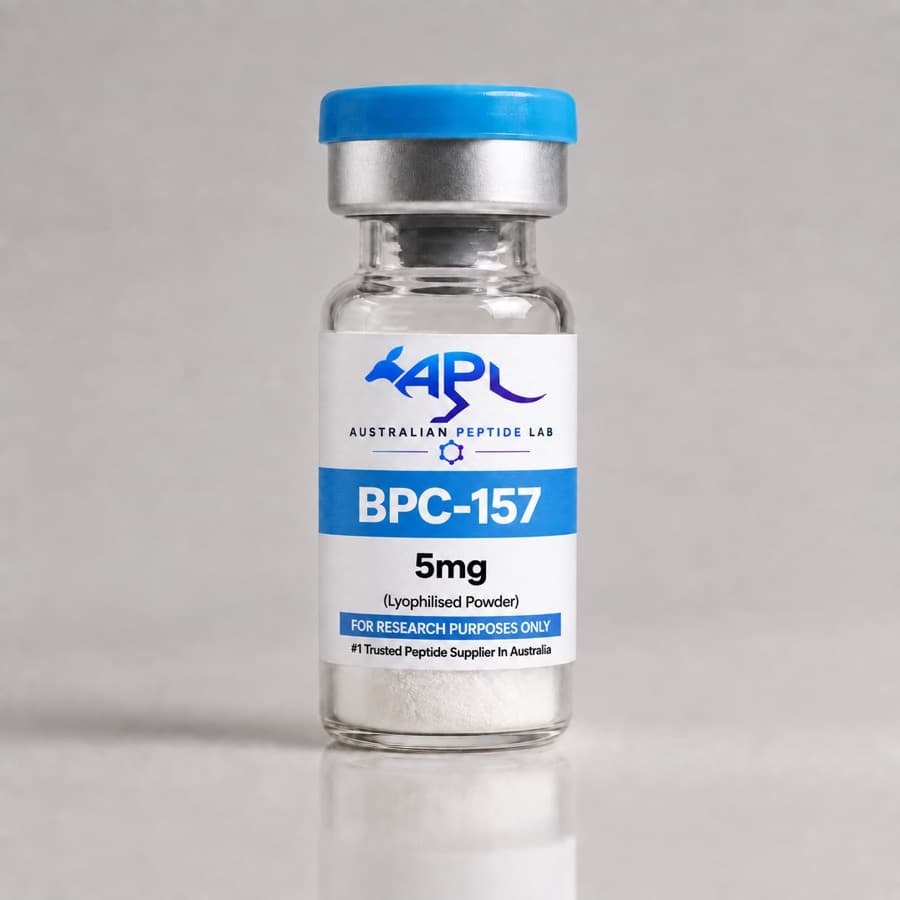
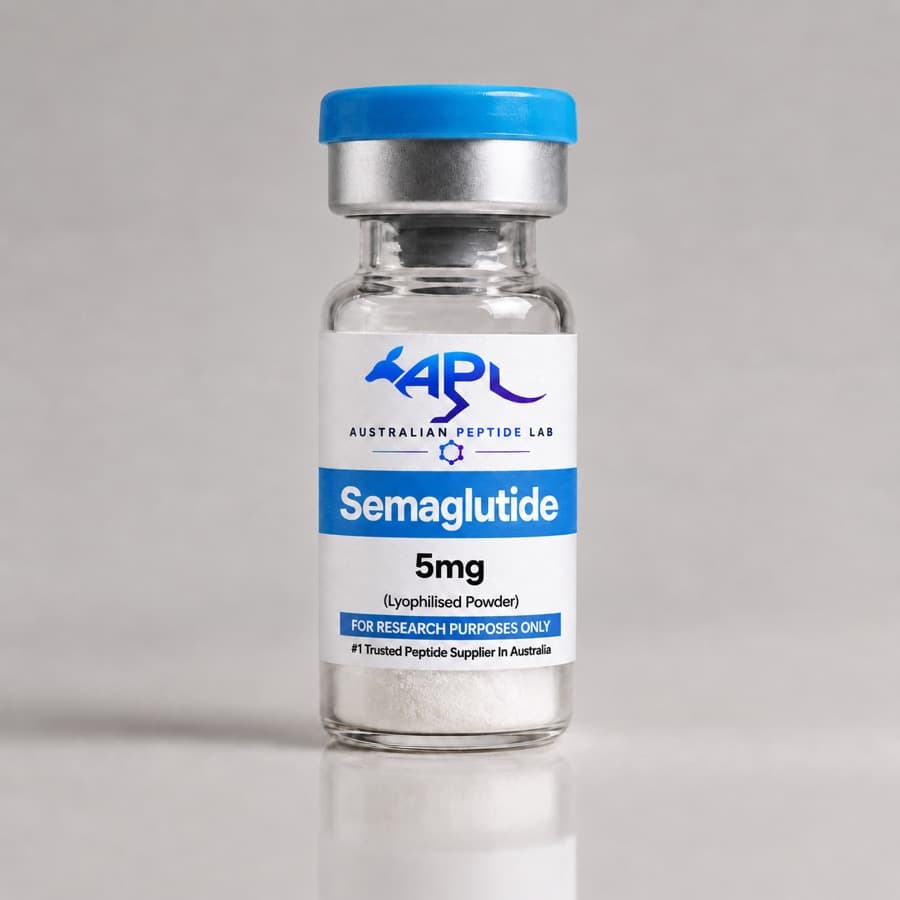
- Store dry, cold and sealed. The lyophilised peptides in the catalogue, from BPC-157 to semaglutide, are all specified for storage at −20 °C; the storage guide explains why moisture and temperature matter.
- Equilibrate before opening. Let a vial warm to room temperature in its sealed state so condensation forms on the glass, not on the cake.
- Judge material by data, not appearance. A shrunken or broken cake is common; an unexpected mass or extra HPLC peaks is not.
- Plan for one reconstitution. Dissolve once, then divide into single-use aliquots to avoid repeated freeze–thaw cycles.
- Choose the diluent deliberately. Sterile water or buffer for most assay stocks; bacteriostatic water contains benzyl alcohol, which then becomes part of the vehicle. For context on what these reagents are and are not, see what are research peptides.
Frequently asked questions
Does a lyophilised peptide still need to be kept cold?
Yes. Drying slows degradation but does not stop it. In freeze-dried insulin, for example, chemical breakdown continued in the glassy solid and sped up as the powder took on water [8], and freeze-dried growth hormone degraded by oxidation, deamidation and aggregation at 25 °C and 40 °C [11]. Cold, dry and sealed storage keeps those rates low; the peptide storage guide covers freezer practice and transport.
The vial looks almost empty. Is the peptide there?
Probably. Formulated medicines include bulking agents such as mannitol or glycine partly to give the cake mass and structure [14]. A few milligrams of peptide dried without them can form a thin film, a small pellet or a scattering of powder that is easy to miss, especially after transit has broken it up. Identity and quantity are confirmed by mass spectrometry and HPLC, not by eye; see what HPLC testing measures.
My cake has shrunk away from the glass or cracked. Is it degraded?
Not necessarily. A cross-industry review of cake appearance concluded that a non-ideal cake often has no effect on product quality and can be an inherent result of formulation, fill and process [17]. Even full collapse did not reduce the long-term stability of two model proteins in one controlled study [18]. Appearance is worth noting, but analytical data decide whether material is fit to use.
Why not dry the cake to zero moisture?
Because drier is not always better. In a Genentech study, tissue plasminogen activator dried below a calculated water monolayer turned opalescent on reconstitution, a sign of physical damage, while samples dried to a monolayer or more of water lost more activity under temperature stress; the authors argued for an optimum residual moisture rather than a minimum [13]. The best value depends on the molecule and formulation [11].
Can a reconstituted peptide be freeze-dried again?
It is possible in principle, but every freeze–dry pass is a stress in its own right. Lyophilised teriparatide, a 34-residue peptide, became more prone to aggregation after freeze-drying than identical solutions that were never dried [12]. Without controlled freezing, a bench re-dry also risks a collapsed cake. Splitting a fresh solution into single-use aliquots and freezing them is the usual alternative.
References
- 1.Angkawinitwong U, Sharma G, Khaw PT, et al. Solid-state protein formulations. Ther Deliv. 2015. PubMed 25565441
- 2.Chang LL, Pikal MJ. Mechanisms of protein stabilization in the solid state. J Pharm Sci. 2009. PubMed 19569054
- 3.Tang X, Pikal MJ. Design of freeze-drying processes for pharmaceuticals: practical advice. Pharm Res. 2004. PubMed 15032301
- 4.Kasper JC, Friess W. The freezing step in lyophilization: physico-chemical fundamentals, freezing methods and consequences on process performance and quality attributes of biopharmaceuticals. Eur J Pharm Biopharm. 2011. PubMed 21426937
- 5.Geidobler R, Winter G. Controlled ice nucleation in the field of freeze-drying: fundamentals and technology review. Eur J Pharm Biopharm. 2013. PubMed 23643793
- 6.Esfandiary R, Gattu SK, Stewart JM, et al. Effect of Freezing on Lyophilization Process Performance and Drug Product Cake Appearance. J Pharm Sci. 2016. PubMed 27019959
- 7.Liao X, Krishnamurthy R, Suryanarayanan R. Influence of processing conditions on the physical state of mannitol--implications in freeze-drying. Pharm Res. 2007. PubMed 17177113
- 8.Strickley RG, Anderson BD. Solid-state stability of human insulin. I. Mechanism and the effect of water on the kinetics of degradation in lyophiles from pH 2-5 solutions. Pharm Res. 1996. PubMed 8865303
- 9.Ling J, Du Y, Wuelfing WP, et al. Molecular mechanisms for stabilizing biologics in the solid state. J Pharm Sci. 2025. PubMed 39617053
- 10.Oliyai C, Patel JP, Carr L, et al. Solid state chemical instability of an asparaginyl residue in a model hexapeptide. J Pharm Sci Technol. 1994. PubMed 8069519
- 11.Pikal MJ, Dellerman K, Roy ML. Formulation and stability of freeze-dried proteins: effects of moisture and oxygen on the stability of freeze-dried formulations of human growth hormone. Dev Biol Stand. 1992. PubMed 1592171
- 12.Merutka G, Murphy BM, Payne RW, et al. Stability of lyophilized teriparatide, PTH(1-34), after reconstitution. Eur J Pharm Biopharm. 2016. PubMed 26620825
- 13.Hsu CC, Ward CA, Pearlman R, et al. Determining the optimum residual moisture in lyophilized protein pharmaceuticals. Dev Biol Stand. 1992. PubMed 1592175
- 14.Bjelošević M, Zvonar Pobirk A, Planinšek O, et al. Excipients in freeze-dried biopharmaceuticals: Contributions toward formulation stability and lyophilisation cycle optimisation. Int J Pharm. 2020. PubMed 31953087
- 15.Li J, Wang H, Wang L, et al. Stabilization effects of saccharides in protein formulations: A review of sucrose, trehalose, cyclodextrins and dextrans. Eur J Pharm Sci. 2024. PubMed 37918545
- 16.D'Hondt M, Bracke N, Taevernier L, et al. Related impurities in peptide medicines. J Pharm Biomed Anal. 2014. PubMed 25044089
- 17.Patel SM, Nail SL, Pikal MJ, et al. Lyophilized Drug Product Cake Appearance: What Is Acceptable?. J Pharm Sci. 2017. PubMed 28341598
- 18.Wang DQ, Hey JM, Nail SL. Effect of collapse on the stability of freeze-dried recombinant factor VIII and alpha-amylase. J Pharm Sci. 2004. PubMed 15067701
This article summarises published research for educational purposes. It is not medical advice. Compounds sold by Australian Peptide Lab are research reagents for in-vitro laboratory use only, not for human or veterinary use.