What Are Research Peptides? Chemistry, Manufacture, Testing and How They Differ from Medicines
What peptides are, how research peptides differ from medicines and supplements, what research use only means, and how they are made, tested and judged.
By the APL Research Team · Updated · 7 min read
Peptides are short chains of amino acids joined by peptide bonds, and "research peptides" are synthetic peptides supplied as laboratory reagents rather than as medicines or supplements. That distinction governs what the material is, how it is made and tested, and what its label can and cannot tell you. This guide sets out what makes peptides a distinct class of research compound, how research-grade material differs from approved medicines and supplements, what "research use only" means, and how to judge quality. It also serves as a map to the rest of the research library.
What a peptide is
A peptide is a chain of amino acids linked through peptide bonds, written from the N-terminus to the C-terminus. By the usual convention, chains up to about 50 residues are peptides and longer ones proteins; reviews of peptide medicines place the class between classic small organic molecules and larger biomolecules such as proteins [1]. Many peptides are hormones, neurotransmitters or fragments of larger signalling proteins, and since insulin was introduced almost a century ago more than 80 peptide drugs have reached the market [2].
The catalogue spans most of that size range:
| Peptide | Residues | Avg MW (g/mol) | Notable structure |
|---|---|---|---|
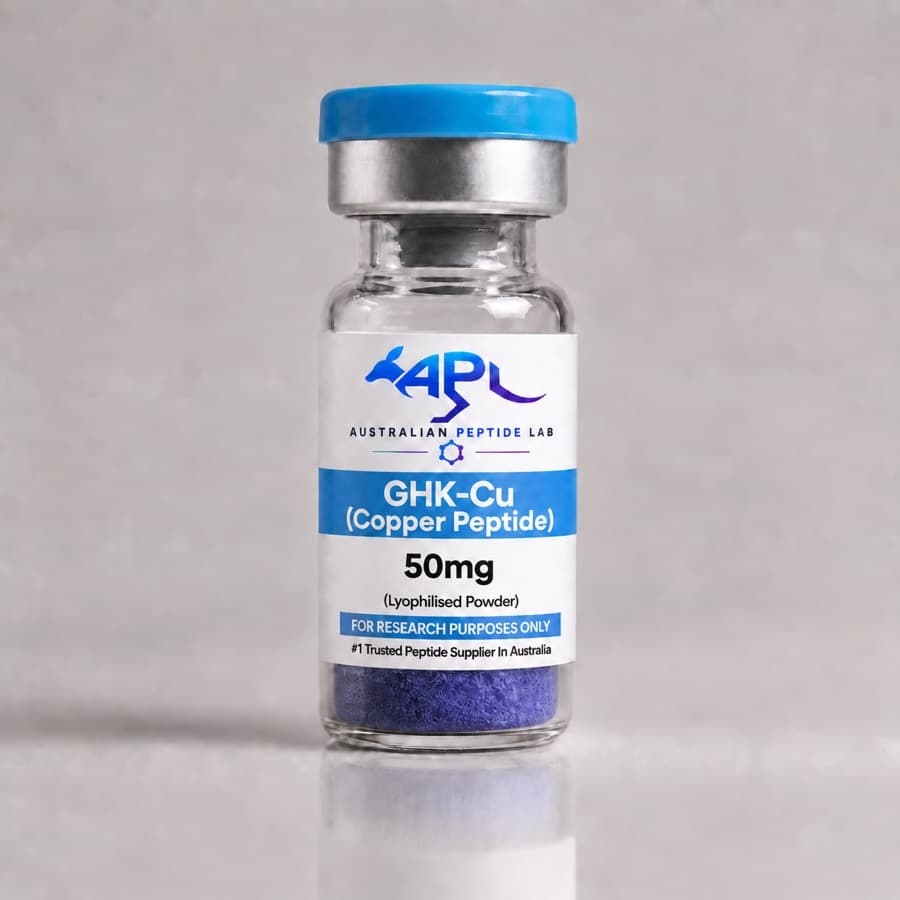
| GHK-Cu | 3 | 340.4 (peptide) | Copper(II) complex |
| Epithalon | 4 | 390.4 | Linear, unmodified |
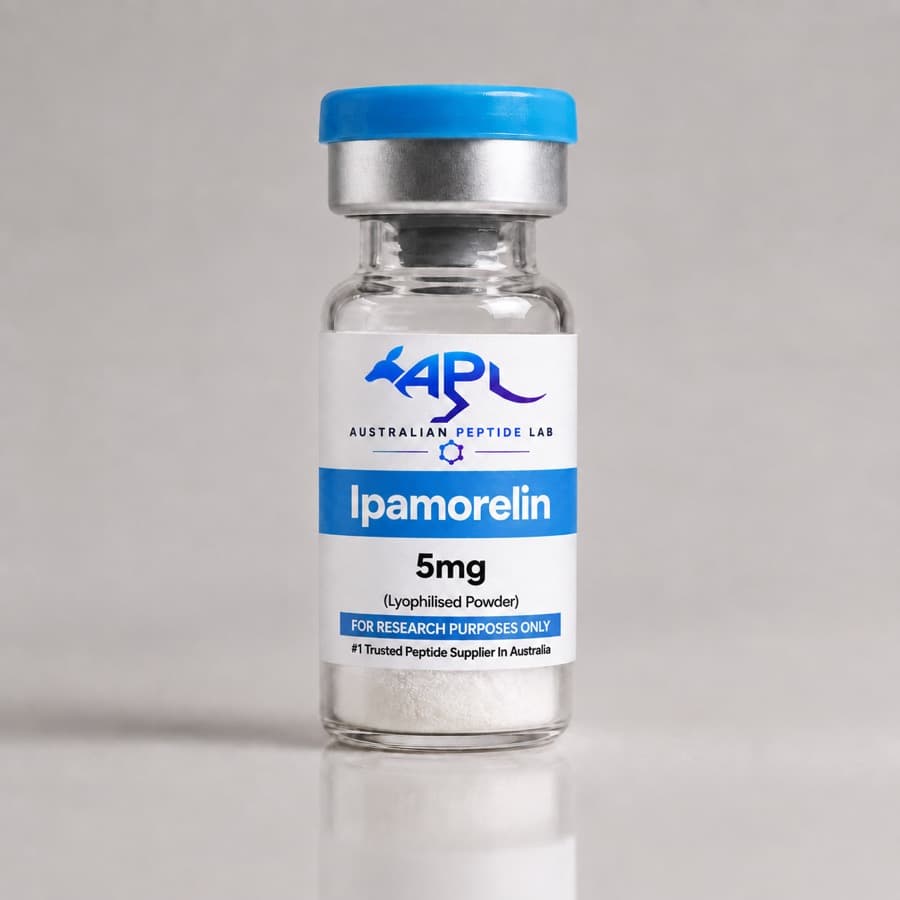
| Ipamorelin | 5 | 711.9 | Aib, two D-residues, C-terminal amide |
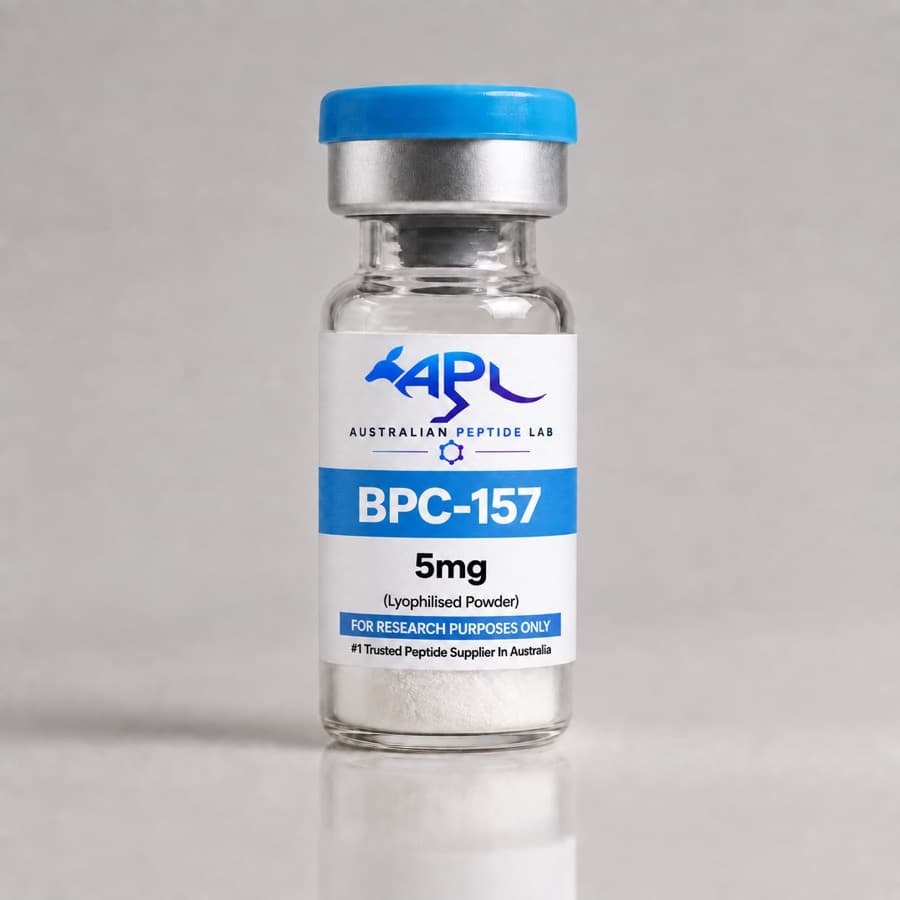
| BPC-157 | 15 | 1419.5 | Linear, unmodified |
| CJC-1295 (no DAC) | 29 | 3367.9 | D-Ala2 and three other substitutions |
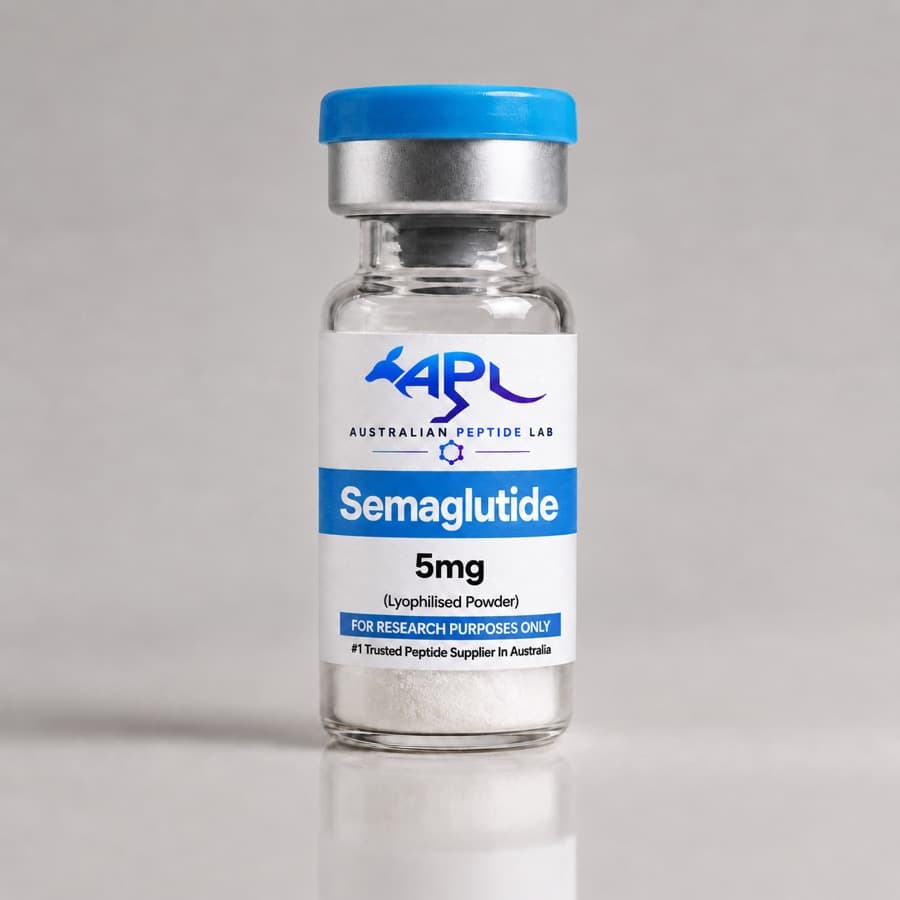
| Semaglutide | 31 | ~4114 | Aib8, lipidated Lys26 |
| Tesamorelin | 44 | ~5136 | N-terminal hexenoyl group |
How to read peptide sequences explains the notation behind the last column.
Peptides compared with other research compounds
Laboratories reach for peptides when they want a molecule that resembles an endogenous ligand. Reviews of peptide therapeutics describe the class as highly selective and efficacious, and relatively well tolerated, and a 2015 review counted around 140 peptide therapeutics in clinical trials [3]. The same reviews are clear about the costs: natural peptides typically show rapid clearance, short half-lives, low membrane permeability and sometimes low solubility [4].
| Small molecules | Peptides | Proteins and other biologics | |
|---|---|---|---|
| Typical size | Usually under 1 kDa | About 0.3–5 kDa in this catalogue | Tens of kDa and up |
| How made | Organic synthesis | Mostly solid-phase peptide synthesis [1, 5] | Expression in living cells |
| Relationship to biology | Often found by screening | Often native hormones, fragments or close analogues [2] | Native or engineered proteins |
| Selectivity | Variable | Typically high [3] | Typically high |
| Stability and clearance | Often orally available, metabolically stable | Rapid proteolysis and clearance unless modified [4] | Long-lived in circulation; fragile to handle |
| Characteristic impurities | Synthetic by-products, isomers | Deletion and insertion sequences, diastereomers, protecting-group adducts, counter-ions [1] | Aggregates, variants, host-cell material |
| Core identity tests | NMR, MS | MS and HPLC | Peptide mapping, MS, activity assays |
Two practical consequences follow. First, peptides are fragile: they are supplied freeze-dried, kept cold and handled in ways that limit proteolysis and adsorption (how lyophilisation works, peptide half-life research). Second, a peptide's selectivity depends on its sequence being exactly right, and a truncated or racemised chain looks identical to the eye, so analytical verification is part of using the reagent rather than an optional extra.
Research peptides, approved medicines and supplements
The same molecule can appear in more than one regulatory category, and the category, not the molecule, decides what the product is.
| Research peptide | Approved peptide medicine | Peptide supplement | |
|---|---|---|---|
| What it is | Synthetic peptide sold as a laboratory reagent | Registered product with an approved indication | Food product, often a protein hydrolysate |
| Composition | One defined sequence, or a defined blend, as a salt with residual water | Defined active ingredient in a formulation, often in a delivery device | Mixture of many peptides of varying length |
| Quality basis | Supplier specification and batch analysis | Manufacturing and specifications assessed by a regulator | Food standards |
| Labelled use | Laboratory research only | As stated in the approved product information | Dietary |
Several catalogue compounds share an active ingredient with an approved medicine. Semaglutide's first approvals were for type 2 diabetes [6]; bremelanotide, sold here as PT-141, was approved in the USA for acquired, generalised hypoactive sexual desire disorder in premenopausal women [7]; and tesamorelin was approved by the FDA in 2010 for HIV-associated lipodystrophy [8]. In each case the approval covers a specific manufactured, formulated product, not the molecule wherever it is sold.
Many other research peptides have no approved medical use at all. A 2026 review for orthopaedic and sports-medicine clinicians found that the evidence for BPC-157, thymosin β4 and TB-500, CJC-1295 with ipamorelin, and GHK-Cu was largely preclinical, with little or no controlled human data [9].
Supplements are a different kind of product again. Collagen and gelatin hydrolysates are peptide mixtures defined by their source rather than by a sequence; after volunteers ingested gelatin hydrolysates, the main collagen-derived peptide detected in their blood was the dipeptide Pro-Hyp, with smaller amounts of several others [10]. A research peptide, by contrast, is a single synthetic sequence whose identity can be checked against a calculated mass.
For how these categories are treated under Australian law, see are research peptides legal in Australia?
What "research use only" means
"Research use only" describes the intended use of a reagent: laboratory investigation, here specifically in-vitro work, and not human or veterinary use. A research-use label carries no dosing information, no approved indication and no claim that a regulator has assessed the product as a medicine.
It is not a quality grade. Two vials with identical research-use labels can differ enormously in purity and identity, and only analytical data show which is which. The peptides in this catalogue, from the repair and recovery range to the cognitive and neuro range, are supplied on that basis.
How research peptides are made
Fmoc solid-phase peptide synthesis is now the method of choice, helped by the low cost of high-quality building blocks and the commercial availability of many modified derivatives [5]. The chain is assembled one residue at a time on a resin, cleaved and deprotected, purified by reversed-phase HPLC and freeze-dried. Because trifluoroacetic acid is used in that HPLC step, purified peptides often end up as trifluoroacetate salts [11]; TFA vs acetate peptide salts covers the alternatives.
Each step can leave characteristic impurities [1]:
- Deletion sequences from incomplete Fmoc removal, and insertion sequences from excess activated amino acid;
- Diastereomers from racemisation during deprotection;
- Protecting-group adducts from incomplete side-chain deprotection, and side reactions with synthesis reagents;
- Oxidised forms and dimers;
- Degradation products such as diketopiperazines, pyroglutamate and succinimide (aspartimide) derivatives.
These are not merely cosmetic. The same review warns that peptide-related impurities can distort early functional studies and lead to erroneous conclusions [1], and counter-ions alone have changed results: trifluoroacetate at 10⁻⁸ to 10⁻⁷ M reduced osteoblast and chondrocyte proliferation and masked a proliferative peptide effect [11]. How peptides are made walks through the full route from resin to vial.
How research peptides are tested
| Test | What it shows | What it does not show |
|---|---|---|
| HPLC purity | Proportion of detected peptide material in the main peak | Identity; peptide content of the powder; impurities hidden under the main peak |
| Mass spectrometry | Molecular mass consistent with the sequence and modifications | Purity; D versus L residues; Leu versus Ile |
| Net peptide content | Fraction of the powder that is peptide rather than counter-ion and water | Purity or identity |
| Counter-ion analysis | Salt form, such as trifluoroacetate or acetate | Anything about the peptide chain |
| Endotoxin testing | Bacterial endotoxin level, relevant to cell and immune assays | Chemical purity |
Each batch in this catalogue is tested by HPLC against a ≥99% purity specification, with identity confirmed by mass spectrometry; batch documentation is available on request. What HPLC testing measures and peptide purity explained explain how to read those numbers, and the peptide molecular weight calculator gives the theoretical mass to compare against a spectrum.
How to evaluate quality
Analyses of material from unregulated sources show what can go wrong. Semaglutide vials bought from illegal online pharmacies had measured purity of 7.7–14.4% against a 99% label claim, contained 29–39% more semaglutide than labelled, and carried detectable endotoxin in every sample [12]. A GHRH analogue in a confiscated product turned out to be only partly C-terminally amidated, which its analysts took as evidence of poor pharmaceutical quality [13], and a product sold as TB-500 contained a seven-residue fragment of thymosin β4 [14].
A practical checklist:
- Batch-specific documentation. The lot number on the certificate should match the vial; generic or undated certificates prove little. See understanding certificates of analysis.
- The chromatogram, not just a number. A purity figure without the trace behind it cannot be judged.
- Observed against expected mass. The spectrum should show the mass calculated from the full sequence, including termini and modifications.
- Salt form and net content. These decide how many moles are in the vial; see peptide molarity calculations.
- Consistent naming. Names such as TB-500 cover more than one molecule, so the sequence should be stated.
- Handling in transit and storage. Lyophilised material tolerates short transit better than solutions, but sustained heat and moisture still matter; see the storage guide.
How to choose a peptide supplier expands this into a full supplier assessment.
Working with research peptides
| Stage | Where to start |
|---|---|
| Before opening the vial | Peptide storage guide, how lyophilisation works |
| Choosing a diluent | What is bacteriostatic water?, bacteriostatic vs sterile water |
| Dissolving | Peptide reconstitution guide, solubility troubleshooting, reconstitution calculator |
| Keeping stocks clean | Sterile technique for peptide handling |
| Calculating concentrations | Molarity calculator, dilution calculator |
| Designing experiments | Designing concentration–response experiments, peptide half-life research, peptide blends explained |
| Specific compound classes | Immunomodulatory peptides, neuropeptides in research, BPC-157 and TB-500 compared, TB-500 research guide |
The catalogue itself is organised by research area: metabolic research, repair and recovery, GH secretagogue research, cosmetic and skin research, longevity and cellular research, cognitive and neuro research and lab supplies. Unfamiliar terms are defined in the glossary, and the editorial policy explains how these guides are sourced and reviewed.
Frequently asked questions
Is a research peptide the same as the medicine that shares its name?
No. Semaglutide, for example, received its first approvals, in the USA and Canada, as a once-weekly treatment for type 2 diabetes supplied in a pre-filled pen [6]. A research vial labelled semaglutide contains the peptide as a lyophilised reagent for laboratory work: it has no formulation, no device, no approved indication and no regulatory assessment of that vial. The shared name describes the molecule, not the product.
Is 'research use only' a purity grade?
No. It describes intended use, not quality. A research-use label says the material is supplied for laboratory work and not for human or veterinary use; it says nothing on its own about purity or identity. Those come from batch analysis, mainly HPLC and mass spectrometry, which is why understanding certificates of analysis matters more than any label wording.
Are peptides just small proteins?
Chemically they are the same kind of molecule, amino acids joined by peptide bonds, and the boundary is a convention: chains up to about 50 residues are usually called peptides. Reviews place peptides between small organic molecules and larger proteins, and most are made by chemical synthesis rather than expression in cells [1]. Size changes almost everything practical: how they are made, analysed, stored and cleared.
How can I tell whether a research peptide is what its label says?
Ask for batch-specific data and check it: a mass spectrum whose observed mass matches the sequence, an HPLC chromatogram showing the main peak and impurities, and a lot number matching the vial. Independent analyses show why: semaglutide vials bought from illegal online pharmacies measured 7.7–14.4% purity against a 99% label claim [12]. The supplier guide gives a fuller checklist.
Why do doping-control laboratories analyse research peptides?
Because peptide products circulate outside regulated supply. Official medicines-control laboratories have built LC-MS/MS screens for illegal peptide preparations, including compounds still in preclinical or clinical development [15], and anti-doping laboratories have identified unexpected molecules, such as a thymosin β4 fragment in a product sold as TB-500 [14]. Thymosin β4 and TB-500 are prohibited in sport [9].
Is everything in a peptide catalogue a peptide?
Not always. NAD+, for example, is a dinucleotide coenzyme rather than an amino-acid chain, and bacteriostatic water is a diluent. They sit in peptide catalogues because they are used alongside peptides in the same kinds of laboratory work.
References
- 1.D'Hondt M, Bracke N, Taevernier L, et al. Related impurities in peptide medicines. J Pharm Biomed Anal. 2014. PubMed 25044089
- 2.Muttenthaler M, King GF, Adams DJ, et al. Trends in peptide drug discovery. Nat Rev Drug Discov. 2021. PubMed 33536635
- 3.Fosgerau K, Hoffmann T. Peptide therapeutics: current status and future directions. Drug Discov Today. 2015. PubMed 25450771
- 4.Di L. Strategic approaches to optimizing peptide ADME properties. AAPS J. 2015. PubMed 25366889
- 5.Behrendt R, White P, Offer J. Advances in Fmoc solid-phase peptide synthesis. J Pept Sci. 2016. PubMed 26785684
- 6.Dhillon S. Semaglutide: First Global Approval. Drugs. 2018. PubMed 29363040
- 7.Dhillon S, Keam SJ. Bremelanotide: First Approval. Drugs. 2019. PubMed 31429064
- 8.Spooner LM, Olin JL. Tesamorelin: a growth hormone-releasing factor analogue for HIV-associated lipodystrophy. Ann Pharmacother. 2012. PubMed 22298602
- 9.Mayfield CK, Bolia IK, Feingold CL, et al. Injectable Peptide Therapy: A Primer for Orthopaedic and Sports Medicine Physicians. Am J Sports Med. 2026. PubMed 41476424
- 10.Iwai K, Hasegawa T, Taguchi Y, et al. Identification of food-derived collagen peptides in human blood after oral ingestion of gelatin hydrolysates. J Agric Food Chem. 2005. PubMed 16076145
- 11.Cornish J, Callon KE, Lin CQ, et al. Trifluoroacetate, a contaminant in purified proteins, inhibits proliferation of osteoblasts and chondrocytes. Am J Physiol. 1999. PubMed 10567002
- 12.Ashraf AR, Mackey TK, Vida RG, et al. Multifactor Quality and Safety Analysis of Semaglutide Products Sold by Online Sellers Without a Prescription: Market Surveillance, Content Analysis, and Product Purchase Evaluation Study. J Med Internet Res. 2024. PubMed 39509151
- 13.Esposito S, Deventer K, Van Eenoo P. Identification of the growth hormone-releasing hormone analogue [Pro1, Val14]-hGHRH with an incomplete C-term amidation in a confiscated product. Drug Test Anal. 2014. PubMed 25283153
- 14.Esposito S, Deventer K, Goeman J, et al. Synthesis and characterization of the N-terminal acetylated 17-23 fragment of thymosin beta 4 identified in TB-500, a product suspected to possess doping potential. Drug Test Anal. 2012. PubMed 22962027
- 15.Vanhee C, Janvier S, Desmedt B, et al. Analysis of illegal peptide biopharmaceuticals frequently encountered by controlling agencies. Talanta. 2015. PubMed 26003685
This article summarises published research for educational purposes. It is not medical advice. Compounds sold by Australian Peptide Lab are research reagents for in-vitro laboratory use only, not for human or veterinary use.